
Understanding Dopamine Hits: Why Smartphone Habits Drive Relational Anxiety
When your phone chimes with a text message, your body reacts right away. Your heart might flutter, your eyes dart to the screen, and a quick spark of pleasure ripples through your chest. In modern dating and long-term partnerships, these small moments create powerful dopamine hits. While staying connected through technology feels convenient, relying on your smartphone for constant emotional validation can silently fuel anxiety, overthinking, and emotional exhaustion.
Dopamine is a key chemical messenger in the brain linked to motivation, expectation, and drive. It is designed to encourage us to seek out rewards like food, safety, and social connection. However, modern smartphones act as constant delivery systems for unpredictable rewards. When you pair mobile technology with the natural vulnerability of romance, you get a powerful combination that keeps your nervous system on high alert.
Understanding how smartphone habits create dopamine hits can help you notice when technology is pulling you out of real-time intimacy. When you learn to manage digital loops, you can build grounded, emotionally safe connections with your partner.
The Neuroscience of the Screen: Why Smartphones Hijack Romantic Chemistry
Smartphones do not just store communication apps. They actively shape how your brain experiences anticipation. When you mix smartphone features with romantic interest, the brain’s natural reward pathways go into overdrive.
Variable Rewards and the Infinite Loop
Psychologists have long known that the most addictive reward system is an unpredictable one. If you press a button and get a reward every single time, the experience quickly becomes predictable. But if you press a button and get a reward sometimes, your brain releases a flood of dopamine in anticipation.
Smartphones operate on this exact principle. You do not know when your partner will text, what emoji they will send, or how quickly they will reply. Opening a text thread or refreshing a social media profile creates a moment of high tension followed by a sudden burst of relief. That shift from uncertainty to reassurance is where the strongest dopamine hits happen.
Read Receipts, Active Statuses, and Hyper-Vigilance
Features like read receipts, typing bubbles, and active online indicators add extra layers of uncertainty. Seeing that a partner read your message five minutes ago without replying can trigger a spike in stress hormones like cortisol. You might find yourself checking your phone repeatedly to see if their status changes.
What feels like a simple desire to communicate is actually a physiological cycle. Your brain enters a state of hyper-vigilance, seeking a digital response to calm down a real-time nervous system alarm.
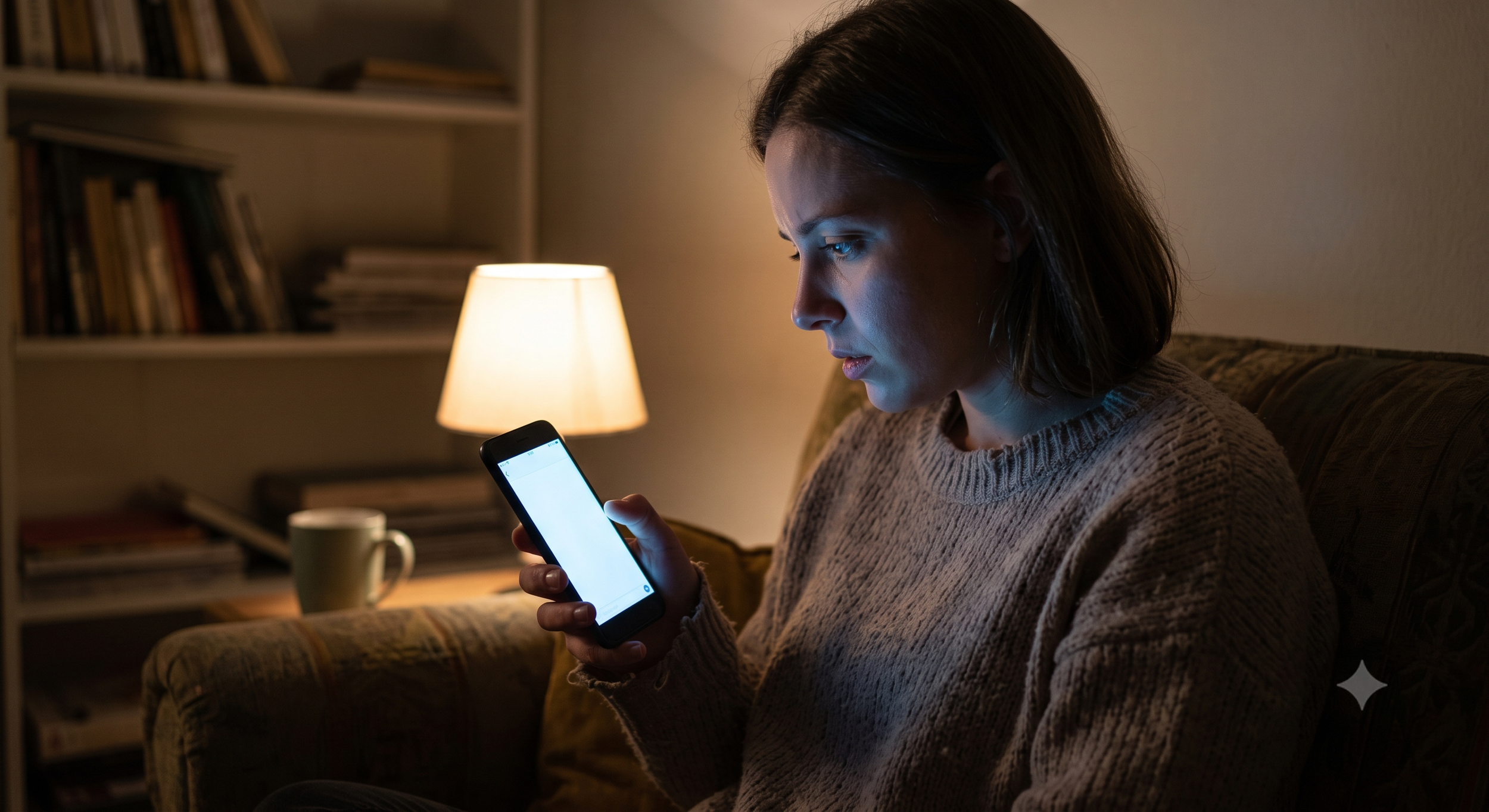
5 Signs Smartphone Habits Are Creating Anxiety in Your Relationship
Technology itself is not harmful, but certain habits can signal that your relationship is relying heavily on digital stimulation rather than deep emotional safety.
1. Compulsive Screen Checking
You find yourself picking up your phone every few minutes, even when you know no new message has arrived. You open and close texting apps automatically, driven by an unconscious urge to find a fresh spark of connection.
2. Mood Swings Based on Reply Times
A fast, affectionate reply makes your entire day feel bright and secure. A delayed reply, even if your partner is simply busy at work, causes a sudden drop in mood, spiraling thoughts, or feelings of rejection.
3. Phone Snubbing During Quality Time
When you sit down for dinner or relax on the couch together, one or both of you routinely checks notifications. Even if you are physically in the same room, your attention is fragmented by the pull of the screen.
4. Resolving Conflicts Over Text Instead of Voice
Using text messages to address hurt feelings or complex emotional issues often feels easier because it avoids immediate confrontation. However, text threads lack voice tone, eye contact, and body language. This ambiguity often leads to misinterpretations and prolonged distress.
5. Losing Interest When Communication Slows Down
When the initial surge of fast messaging slows into a normal, predictable routine, you might feel a sudden loss of interest or worry that the flame is gone. In reality, the relationship is moving out of a high-dopamine phase and into a quieter, steady phase of connection.
Dopamine Hits vs. Oxytocin Connection: Finding the Balance
To break free from screen-driven anxiety, it helps to understand how different brain chemicals support your emotional well-being.
While dopamine hits provide early excitement, oxytocin builds lasting bonds. Oxytocin is released when you hold hands, look into each other's eyes, share a meal without distractions, or comfort each other after a long day. Shifting your focus from text alerts to real-world presence helps your nervous system feel genuinely safe.
Practical Steps to Untangle Your Relationship From Your Phone
You do not need to abandon your smartphone to build a healthier connection. Small, intentional boundaries can help you step away from digital anxiety and reconnect with the present moment.
Set Phone-Free Zones
Establish simple boundaries around screen time. For example, make the dinner table and the bedroom phone-free spaces. Putting phones out of sight reduces the impulse to check for alerts and opens up room for conversation.
Turn Off Non-Essential Notifications
Disable banner notifications and badges for messaging apps when you need to focus or relax. Deciding when to check your messages, rather than letting alerts interrupt your day, puts you back in control of your attention.
Move Complex Conversations Offline
If a text thread begins to feel tense or confusing, pause and suggest picking up the conversation in person or over a phone call. Hearing a partner's voice provides vital emotional context that text messages cannot convey.
Practice Self-Soothing During Delays
When you feel anxious while waiting for a text, pause before checking your screen. Take three deep breaths, place a hand on your chest, and remind yourself that a delayed reply does not mean a loss of love or safety.

How Therapy Helps You Reclaim Emotional Security
If digital communication habits are triggering deep anxiety or recurring conflicts, therapy offers a supportive space to explore the root causes. Often, compulsive screen checking and fear of delayed replies are connected to past relational wounds, attachment anxiety, or fears of abandonment.
Through professional counseling, you can:
Identify how past experiences shape your present relationship patterns.
Learn nervous system regulation techniques to manage anxiety without needing instant digital validation.
Build clearer, more confident boundaries around phone use and communication.
Deepen emotional intimacy and trust with your partner beyond the screen.
Ground Your Relationship in Real Presence with Anchor of Peace Counseling
You do not have to navigate relationship anxiety or digital overwhelm on your own. If you are ready to move away from constant screen checking and cultivate quiet, lasting emotional safety, compassionate support is nearby.
At Anchor of Peace Counseling in Pueblo, CO, and throughout Colorado online, I specialize in helping individuals heal relational trauma, manage relationship anxiety, and build secure attachment patterns. Whether you are seeking in-person therapy at our Pueblo office or virtual therapy across Colorado, I am here to help you step off the emotional roller coaster and anchor your life in peace.
Contact Anchor of Peace Counseling in Pueblo, CO today to schedule your free consultation and take your first step toward steady, fulfilling connection.
